
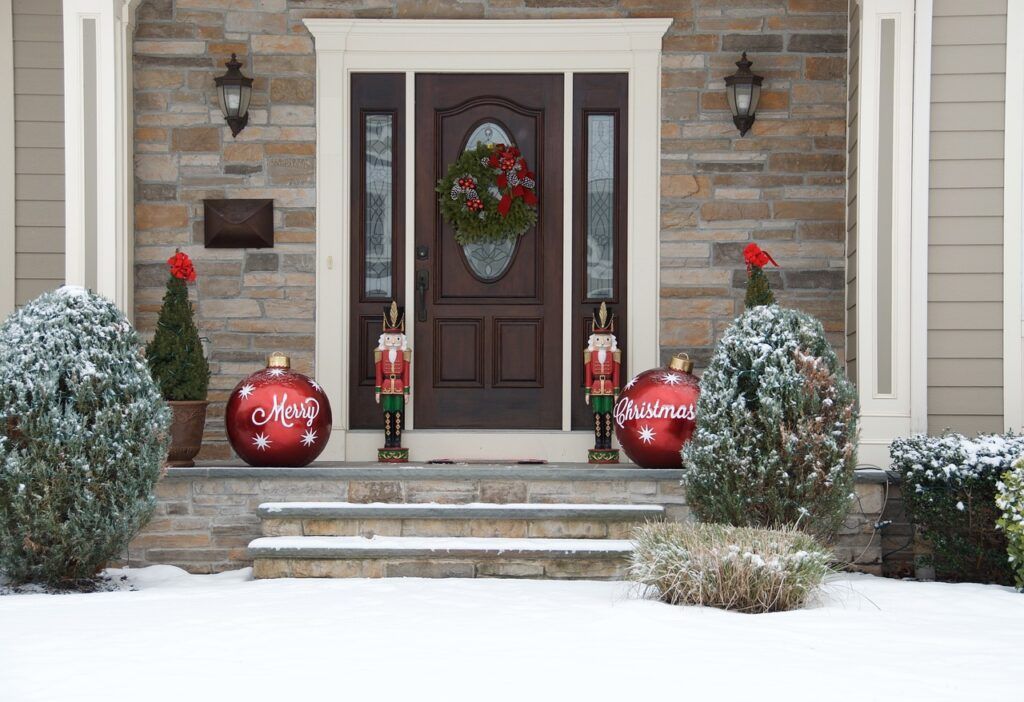
It is time to put up holiday decorations!! I love this time of year! The week of Christmas, my family and I go out and look at all of the holiday decorations and lights. But, what about the HOA? Some HOAs, that have the budget for decorations, might put up lights and bows in the HOA common area. Most HOAs hire someone to put and take down décor. I am sure a lot of people wish they could hire someone for their own personal decorations. No one wants to get that dreaded letter from the HOA stating that they need to take down decorations. No HOA wants to be considered a scrooge at the holidays either. I read an article from 2019 where a Texas HOA asked a couple to take down their holiday decorations because they were installed too early. The mother was pregnant with their third child and they needed to put the decorations up early because she was due to have her baby a month later. Oops! I think that whole situation could have been avoided if both parties communicated with each other. Here are some tips regarding how to avoid those uncomfortable situations. Draft guidelines if the declarations allow for it. In those guidelines, the HOA can set a timeline for when decorations can be put up and when they need to be taken down (be reasonable!). The guidelines can also address any nuisance concerns (such as lights and other noisy or distracting decorations that can cause issues). Don’t limit the types of decorations or the subject matter. Limiting some colors or certain types of decorations used in specific religions or cultures can actually open the Association to liability. Using specific identifying words in any guidelines can alienate homeowners. The Association should air on the side of caution when prohibiting decorations and the wording should be broad enough to include everyone. Lastly, communicate with each other! If there are decorations that are causing issues, talk to neighbors about it. If you want to install decorations before the guideline dates, call the HOA or management company. Give them the reason why early installation is needed. The point is to be inclusive and keep the Association safe and happy. I hope everyone is safe and happy during the holidays!


It never fails. A HOA has major goals for the year, but how much money will they spend? How can the HOA even achieve those goals? Who is going to build the thing they want, or will the Board of Directors raise assessments? What if the HOA doesn’t even have goals? How do they figure that out? A reserve study is a mechanism to determine what the association’s goals might be and how the association may pay to accomplish those goals. The association must create a budget every year to determine the needs of the association and a reserve study can help the association finalize the total numbers of the budget. A reserve study may also be the only way to determine when vital components of the association need to be replaced. Replacement and maintenance could be the most important part of the association’s duties. A condominium association that has increased responsibilities in the infrastructure of the building or buildings will likely be doing reserve studies regularly. If maintenance is not regularly done, the condominium association can see catastrophic outcomes (even fatal) as seen in Florida after a condominium building collapsed. Reserve studies do not cost a significant amount of money (depending on the common areas and whether the association is a condominium or residential subdivision). In Texas, there is no requirement for annual or regular reserve studies. Some states have requirements that HOAs perform reserve studies every three or five years. Some statutes dealing explicitly with condominium associations discuss reserve studies but no statute specifically requires it be done. This may change after the building collapse in Florida. Regardless of future requirements, reserve studies do help the association have a broad overview of what needs to be done, how much it will cost, and how much the association already has in their operating account or reserve accounts.
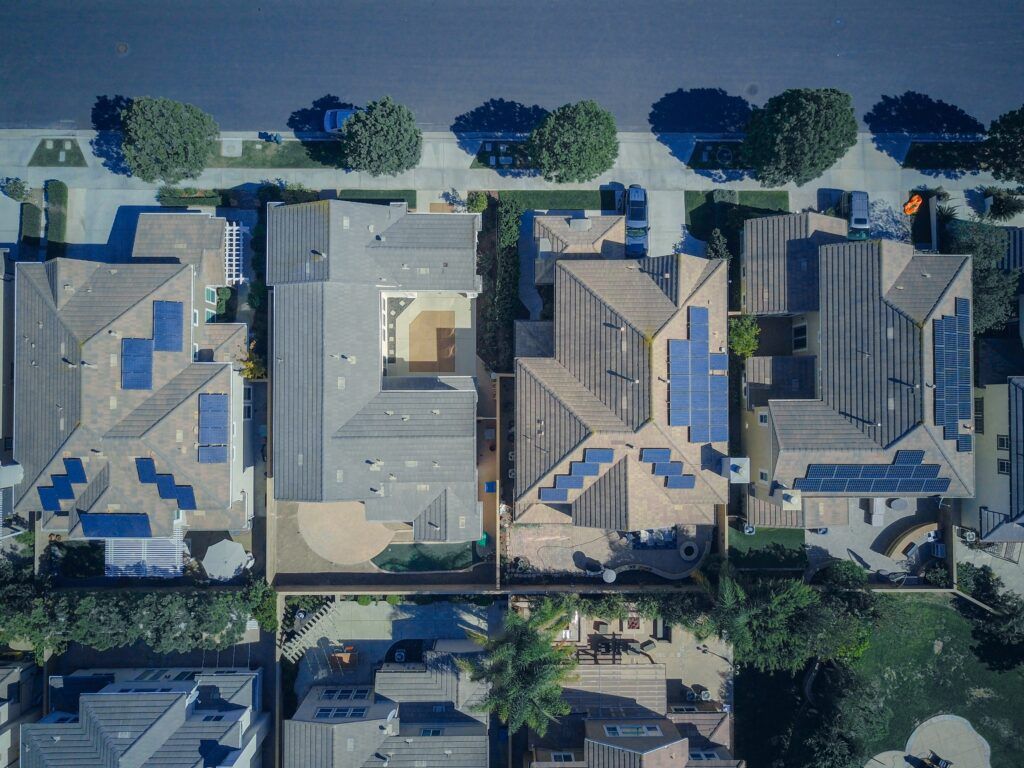
Under the Texas Property Code, Associations cannot restrict a homeowner from installing solar panels. But, they can restrict the types of materials used in installing solar panels and the location of the solar panels. There has been an increase in the use of solar panels and the need for clean energy. How is that going to affect the enforcement of deed restrictions and the ability of the HOA to place reasonable restrictions on the use of solar panels? The Inflation Reduction Act was passed by the legislature to help consumers with the installation of solar panels, which can be quite high. Homeowners can add 30% of the cost of installing solar panels as a credit on their tax return. This is a huge incentive to homeowners to install solar panels on their homes. Under 202.010, the association is extremely limited in restricting solar panels. But, the association can implement policies on the material and placement of solar panels. In addition, if the installation of solar panels is a public safety issue, the association can restrict the installation. Even if limited on restrictions, the homeowner must still submit an application to the association to detail where the solar panel is going to be placed and how the installation will occur. But, the association or architectural control committee cannot withhold approval if the code section requirements are met or are far exceeded. A developer may prohibit solar panels when in a development period there are fewer than 51 planned residential units. Regardless of how the residents feel about clean energy, climate change, or solar panels specifically, HOAs need to be familiar with how solar panels are installed and the consequences of moving panels or the materials involved in installing solar panels.


I read an article recently about the drought here in Texas. Some HOAs in Texas have bodies of water located within the HOA. I have also detailed in these educational articles and videos what a municipal utility district is. But, who is the TCEQ? How is this institution connected with HOAs and MUDs? Some of you may not even know that this institution exists. TCEQ stands for Texas Commission for Environmental Quality. The TCEQ answers to the Governor of Texas and has six different offices – Office of Administrative Services, Office of Compliance and Enforcement, Office of Legal Services, Office of Air, Office of Waste, Office of Water. So, the TCEQ is a regulatory agency which was created to protect the right of access to natural resources (mainly surface water). The latest version of this agency was created in 2002 but earlier versions were the Texas Board of Water Engineers which was established in 1913. In 2011, sunset legislation continued the TCEQ until 2023 and this agency will be further reviewed by the Texas legislature to determine its efficiency and purpose. In short, the TCEQ makes sure that citizens of Texas and the State of Texas protect ground water for generations to come. What if a HOA has a body of surface water located in the boundaries? Most likely the HOA is also located in a MUD. The MUD is a governmental body that is regulated by the TCEQ. Natural bodies of water are essential to wildlife and the health of the environment. Most HOAs that have lakes or ponds (some even have dams!) want to fish and enjoy the natural aesthetic within their parks. It is interesting to see how water is protected behind the scenes. Riparian rights will change and be more important as time passes because of droughts and the increased use of water with increased development. In the article I read recently, the author focused on aquifer mining. Aquifer mining has not been used for residential use but only for irrigation of crops. Because of the drought and increased water use, aquifer mining will be required in the future. Springs and groundwater come directly from these aquifers. So, it is vital to protect the source. Currently, there are nine major aquifers and twenty two minor aquifers. The biggest aquifer is the Ogallala aquifer and was formed about 2 to 6 million years ago. It spans from South Dakota to Texas. I hope this gives you a little information on water and the HOA. This article only briefly skims the surface regarding the issues as it pertains to ground water in Texas. There are so many great resources on the TCEQ website!